 |
| Global Christianity: Population, Denominations, and Regional Distribution |
Christianity, the world's largest religion, claims over 2.3 billion followers, accounting for roughly 31% of the global population. This vast religious community is diverse, with numerous denominations that reflect different beliefs, practices, and historical developments. In this blog, we’ll explore the major branches of Christianity, where Christians are located, and how this faith is distributed globally.
Types of Christians
 |
Global Christianity: Population, Denominations, and Regional Distribution |
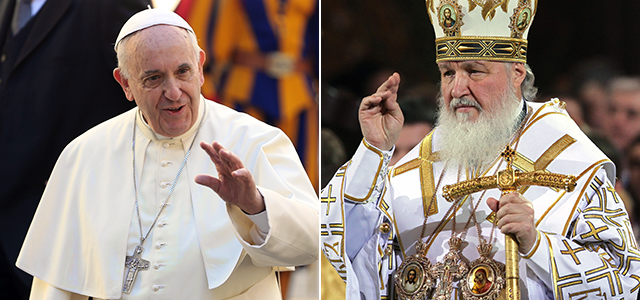
Catholicism:
- Population: About 1.3 billion, representing more than 50% of the world's Christians.
- Beliefs: Catholics follow the leadership of the Pope and the Roman Catholic Church. Their faith emphasizes the importance of sacraments like the Eucharist, veneration of saints, and a hierarchical structure of clergy.
- Main Regions: Catholicism is predominant in Latin America, Europe, and parts of Africa.
Protestantism:
- Population: Around 900 million, making up roughly 37% of Christians.
- Beliefs: Protestantism emerged from the Reformation in the 16th century, advocating for the Bible's central role in faith and opposing many practices of the Catholic Church. It includes a wide range of subgroups such as Baptists, Methodists, Pentecostals, and Anglicans.
- Main Regions: Protestants are concentrated in North America, Sub-Saharan Africa, and Europe.
Eastern Orthodoxy:
- Population: Approximately 260 million, or about 11-12% of Christians.
- Beliefs: Eastern Orthodox Christians split from the Roman Catholic Church in 1054 in the Great Schism. They place strong emphasis on ancient Christian traditions, sacraments, and a mystically oriented spirituality centered around the liturgy.
- Main Regions: The Orthodox Church has its largest base in Eastern Europe and Russia, with smaller communities in the Middle East.
In addition to these three major branches, there are smaller groups such as Oriental Orthodox Churches, Anglicans, and Restorationist movements like the Latter-day Saints (Mormons). These represent a smaller percentage of the overall Christian population but are significant in their respective regions.
Global Distribution of Christians
 |
| Global Christianity: Population, Denominations, and Regional Distribution |
1. Latin America and the Caribbean
- Total Christians: Over 600 million.
- Key Countries:
- Brazil, with about 180 million Christians, has the largest Christian population in the region.
- Mexico follows closely, with over 100 million Christians.
- Catholicism dominates the region, though Evangelical and Pentecostal groups are growing quickly.
2. Sub-Saharan Africa
- Total Christians: About 630 million.
- Key Countries:
- Nigeria has over 90 million Christians, the largest Christian population in Africa.
- Other significant Christian populations include Democratic Republic of the Congo and Ethiopia.
- The region has witnessed a surge in Protestant and Pentecostal Christianity, although Catholicism remains influential.
3. Europe
- Total Christians: Around 530 million.
- Key Countries:
- Russia has the largest Christian population in Europe, with over 100 million Orthodox Christians.
- Germany, Italy, and France are also home to large Christian communities, mostly Catholic and Protestant.
- Though Christianity remains the dominant religion, secularization is strong in many parts of Western Europe.
4. North America
- Total Christians: Around 260 million.
- Key Countries:
- The United States is home to about 230 million Christians, predominantly Protestants (Evangelical, Baptist, and mainline denominations).
- Canada has around 22 million Christians, with a significant Catholic presence.
- Christianity is highly diverse in this region, with Protestantism, Catholicism, and newer Christian movements all holding influence.
5. Asia-Pacific
- Total Christians: About 290 million.
- Key Countries:
- The Philippines, with over 85 million Christians, is the most significant Christian-majority nation in Asia.
- South Korea and China have rapidly growing Protestant communities.
- Though a minority religion in most countries, Christianity is spreading in several parts of Asia.
6. Middle East and North Africa
- Total Christians: Approximately 12 million.
- Key Countries:
- Egypt has the largest Christian population, with around 10 million Coptic Orthodox Christians.
- Christians are a small minority in this predominantly Muslim region, and many face challenges due to political and religious tensions.
Christianity in a Global Context
 |
| Global Christianity: Population, Denominations, and Regional Distribution |
This global community reflects both unity and diversity, with each branch contributing to the rich tapestry of Christian tradition across the world. Whether through centuries-old customs or rapidly growing new movements, Christianity continues to have a profound impact on the world stage.
Comments
Post a Comment